The Ultimate Guide to Secure File Transfers Online
Apr 06, 2026 11:29 AM
Michael Carter
In today’s digital world, sharing files online has become a daily necessity. From sending work documents and media files to collaborating with teams across the globe, file transfer plays a key role in how we communicate and operate.
However, with convenience comes responsibility. Ensuring your files are shared securely is just as important as sharing them quickly. In this guide, you’ll learn what secure file transfer is, how it works, and the best practices to keep your data safe.
What Is Secure File Transfer?
Secure file transfer refers to the process of sending digital files over the internet while protecting them from unauthorized access, interception, or data breaches.
Unlike basic file sharing methods, secure transfer uses encryption, authentication, and controlled access to ensure that only intended recipients can view or download the files.
Why Secure File Sharing Matters
With cyber threats on the rise, unsecured file transfers can expose sensitive information such as:
- Personal data
- Business documents
- Financial records
- Confidential media files
Using secure file sharing methods helps:
- Protect your privacy
- Prevent data leaks
- Maintain business integrity
- Ensure compliance with data protection regulations
How Secure File Transfer Works
Secure file transfer typically involves a few key steps:
- Encryption – Files are encrypted before being uploaded, making them unreadable to unauthorized users.
- Upload to a Server – The encrypted file is stored on a secure cloud platform.
- Access Control – A unique link or permission is generated for the recipient.
- Download with Authorization – Only users with access rights can download and decrypt the file.
Platforms like https://filesharer.cc make this process simple by combining speed with strong security features.
Best Methods for Sharing Files Securely
Here are some of the most reliable ways to share files online:
1. Cloud-Based File Sharing Services
Cloud platforms allow users to upload files and share them via secure links. Many services offer password protection and expiration dates for links.
2. Encrypted File Transfer Tools
These tools ensure that files are encrypted both during upload and download, adding an extra layer of protection.
3. Password-Protected Links
Adding a password ensures that even if someone gets the link, they cannot access the file without authorization.
4. Temporary File Sharing
Files are automatically deleted after a certain period, reducing long-term risk.
Tips for Safe File Sharing
To keep your files secure, follow these simple practices:
- Always use trusted platforms
- Enable password protection whenever possible
- Avoid sharing sensitive files over public Wi-Fi
- Set expiration dates for shared links
- Regularly delete unused files
Benefits of Using Online File Sharing Platforms
Modern file sharing services offer several advantages:
- Fast uploads and downloads
- Easy collaboration with teams
- Access from anywhere
- No need for physical storage devices
- Scalable storage options
Using a reliable service like https://filesharer.cc can simplify your workflow while keeping your data protected.
Final Thoughts
Secure file transfer is no longer optional. Whether you’re sharing personal files or managing business data, taking the right precautions can save you from serious risks.
By using trusted platforms, applying basic security practices, and understanding how file sharing works, you can confidently share files online without compromising safety.
Login or create account to leave comments
Popular articles

Top Free Cloud Storage Platform for Fast and Secure File Sha...
Mar 13, 2026 07:18 PM
Why Secure Cloud Storage Is Essential for Modern File Sharin...
May 19, 2026 01:40 PM
What Is File Sharing and How to Share Files Online Securely
Mar 12, 2026 07:43 PM
Best Free Cloud Storage for Secure File Sharing in 2026
Mar 13, 2026 07:08 PM
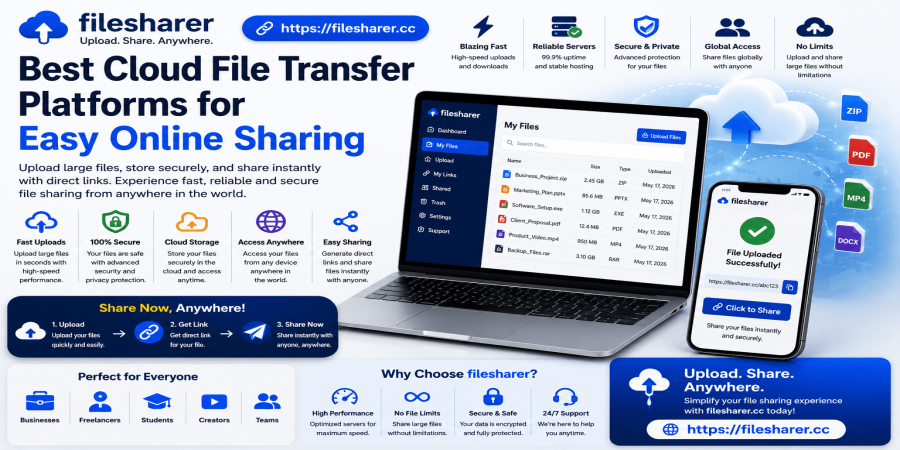
Best Cloud File Transfer Platforms for Easy Online Sharing
May 19, 2026 01:48 PM
Comments (0)